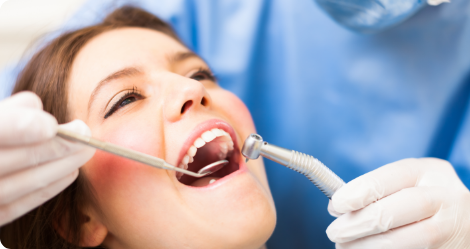
Dental Implants

Dental Implants, a long-term solution for missing teeth
At Mickleham Dental Tullamarine, our dentists understand how missing teeth can hinder your quality of life. Missing teeth can affect your ability to smile, eat and even speak.
There has been increasing popularity to replace missing teeth with dental implants amongst patients in Melbourne. Dental implants provide a high quality, functioning, natural looking permeant solution for missing tooth replacement.
Are you looking for professional Dental Implants in Melbourne? Our team of highly experienced dentists offer Dental Implants to help restore your smile.
Are you looking to have a single Dental Implant placed or looking to complete a smile make over? Contact our friendly reception staff for more information and to help assist you with book a consultation with one of our experienced dentists.
What is a Dental Implant?
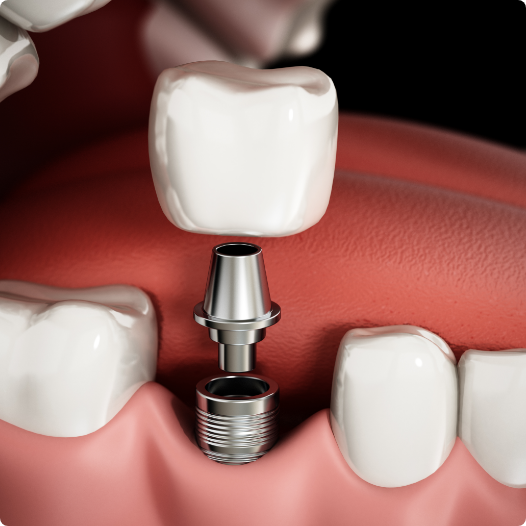
A Dental Implant is a small, titanium screw that is secured into your jawbone. A Porcelain Crown is then permanently attached the top of the implant to fill the gap of the missing tooth, creating a functioning natural-like tooth. The planning phase consists of your dentist taking you through a thorough oral examination. This will include them taking impressions of your teeth, digital images and any relevant radiographic imaging of your mouth.
The Dental Implant Procedure
While Dental Implants are regularly performed, they are a quite complex procedure and take precise planning.
The Comprehensive Dental Examination
The dentists at Mickleham Dental will start your dental implant journey, by completing a comprehensive dental examination, including taking dental X-Rays and 3D images of your jaw. During this appointment your medical and dental history will be discussed and a treatment plan will then be created, to tailor to your requirements. The implant planning process is then done via our 3D planning technology, giving the best outcome and treatment possible.
Bone Grafting
Bone Grafting may be the next Step require in the implant process. Bone Grafts involves preparing you jawbone to generate a solid foundation for the implant to be screwed into. Your dentist will advise you of the best option if a Bone Graft is required, this includes the best type of material to be used in order to rebuild your jawbone, ready for placement. This process may take several months, as you will need to wait for the transplanted bone to grow and ad head to the existing jaw bone, creating a stable base for the implant.
Stage one of the implant process
Your dentist will place the titanium screw into your jawbone and a healing cap will be placed onto of the screw to aid in the healing process. Once completed, your jawbone will start to grow into the Dental Implant, this process is known as Osseointegration. This process may take several months to fully integrate with the implant.
Stage two of the implant process – the final result!
Once your gums are fully healed, a scan will be taken of your mouth and teeth. This will be used to design a natural-looking tooth, which will be permanently attached to the implant. Your dentist will then discuss the design and shade matching of the implant to your natural teeth, in order to choose the most suitable design for you.

Care
How to care for your Dental Implants
Like your natural teeth, dental implants require regular maintenance to guarantee the best oral health. Whilst they are strong and durable, It is not to say you should neglect them. Just like your natural teeth, dental implants are only permanent if you take good care of them.
Mickleham Dental Recommends Practicing Good Oral Hygiene By:
- Brushing your teeth twice daily, with a soft toothbrush
- Flossing daily
- Limiting your intake of sugary foods and drinks
- Limiting your intake of high acidic foods, such a lemons
- Avoid smoking or vaping
- Visiting your dentist for regular check up and cleans every 6 months.
Dental Implants available at Mickleham Dental, Tullamarine
Are you or a loved one experiencing a looking to start your dental implant journey and are located in or around Tullamarine? Please get in touch with our friendly receptionist team for further information and we’ll be more than happy to help.